Calcium Channel
Ca2+ channels; Ca channels
Calcium channel is an ion channel which displays selective permeability to calcium ions. It is sometimes synonymous as voltage-dependent calcium channel, although there are also ligand-gated calcium channels. Voltage-gated calcium (CaV) channels catalyse rapid, highly selective influx of Ca2+ into cells despite a 70-fold higher extracellular concentration of Na+. Some calcium channel blockers have the added benefit of slowing your heart rate, which can further reduce blood pressure, relieve chest pain (angina) and control an irregular heartbeat.
Calcium Channel Isoform Specific Products
All Product Categories
-
Calcium Channel Inhibitors
(583)
View all products
-
Calcium Channel Agonists
(35)
View all products
-
Calcium Channel Antagonists
(210)
View all products
-
Calcium Channel Activators
(86)
View all products
-
Calcium Channel Modulators
(45)
View all products
-
Calcium Channel Chemical
(1)
View all products
-
Calcium Channel Inducers
(11)
View all products
-
Calcium Channel Controls
(10)
View all products
-
Calcium Channel Ligands
(7)
View all products
-
Calcium Channel Related Products (1224)
Related Products (1224)

-
Antibodies (29)
-
Related Compound Screening Libraries (1)
-
Calcium Channel Isoform Comparison
-
Pregabalin diacid
 0 ImagesPregabalin diacid is an impurity of Pregabalin, a lipophilic GABA (γ-aminobutyric acid) analog with anxiolytic and anticonvulsant activity. Pregabalin may act on the α(2)β subunit of voltage-dependent calcium channels, which are widely distributed in the peripheral and central nervous systems. Pregabalin can effectively induce hypoalgesia and improve behavioral disorders.
-
Diplacone
 0 ImagesSynonyms: Nymphaeol A; Propolin CDiplacone is an orally active geranyl flavanone. It is isolated from the fruits of Paulownia tomentosa. Diplacone reduces COX-2 levels and increases the pro-MMP2/MMP2 ratio. It induces ferroptosis-mediated cell death. Diplacone enhances mitochondrial Ca2+ influx and ROS production. It possesses anti-inflammatory and free radical-scavenging activities. Diplacone can be used in research related to ulcerative colitis and non-small cell lung cancer.
-
Nitrendipine (Standard)
 0 ImagesSynonyms: BAY-E-5009 (Standard)Nitrendipine (Standard) is the analytical standard of Nitrendipine (HY-B0424). This product is intended for research and analytical applications. Nitrendipine (BAY-E-5009) is an orally active analog of Nifedipine (HY-B0284) and dihydropyridine calcium channel blocker. Nitrendipine induces Apoptosis. Nitrendipine has antihypertensive effects. Nitrendipine blocks alcohol and Morphine withdrawal symptoms. Nitrendipine reduces right ventricular hypertrophy and pulmonary vascular changes induced by intermittent hypoxia. Nitrendipine has anticancer effects on neuroblastoma.

-
L-Ascorbic acid-13C6-1
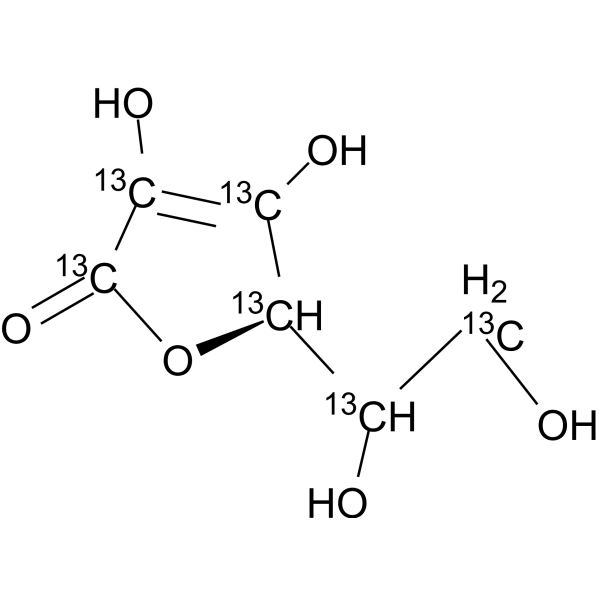 0 ImagesSynonyms: L-Ascorbate-1; Vitamin C-13C6-1L-Ascorbic acid-13C6-1 (L-Ascorbate-1; Vitamin C-13C6-1) is a 13C labeled L-Ascorbic acid (HY-B0166). L-Ascorbic acid (L-Ascorbate), an electron donor, is an endogenous antioxidant agent. L-Ascorbic acid inhibits selectively Cav3.2 channels with an IC50 of 6.5 μM. L-Ascorbic acid is also a collagen deposition enhancer and an elastogenesis inhibitor. L-Ascorbic acid exhibits anti-cancer effects through the generation of reactive oxygen species (ROS) and selective damage to cancer cells.
-
Digitoxin (Standard)
 0 ImagesDigitoxin (Standard) is the analytical standard of Digitoxin. This product is intended for research and analytical applications. Digitoxin is an anti-cancer agent. Digitoxin induces apoptosis, inhibits influenza cytokine storm, causes DNA double-stranded breaks (DSBs) and blocks the cell cycle at the G2/M phase. Digitoxin induces calcium uptake into cells by forming transmembrane calcium channels and can be used for research of heart failure .
-
Nemadipine B
 0 ImagesCat. No.: HY-136482CAS No.: 79925-38-5Nemadipine B is a calcium channel blocker and an EGL-19 antagonist. Nemadipine B induces Egl, Vab and Gro phenotypes in Caenorhabditis elegans.
-
Thio-NADP
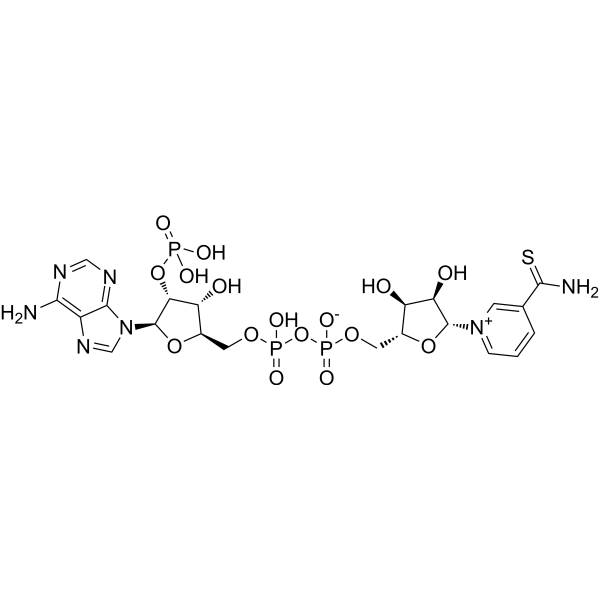 0 ImagesCat. No.: HY-154924CAS No.: 19254-05-8Synonyms: S-NADPThio-NADP (S-NADP) is a nicotinic acid adenine dinucleotide phosphate (NAADP) inhibitor. Thio-NADP activates partial Ca2+ release.
-
Flavoxate
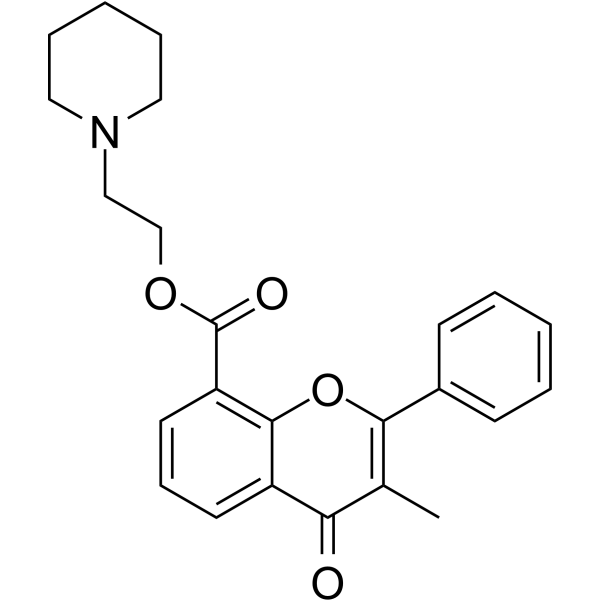 0 ImagesSynonyms: Rec-7-0040 free base; DW61 free baseFlavoxate (Rec-7-0040 free base; DW61 free base) is an orally active L-type Ca2+ channel inhibitor and antispasmodic. Flavoxate inhibits cyclic adenosine monophosphate production by blocking voltage-dependent inward Ba2+ currents, regulating the brainstem micturition center, and stimulating G protein-coupled receptors. Consequently, Flavoxate induces relaxation of bladder smooth muscle and inhibits isovolumetric rhythmic contractions. Flavoxate effectively increases bladder capacity and alleviates symptoms of urgent urination frequency and pollakiuria caused by overactive bladder. Flavoxate can be used in research on overactive bladder and related voiding dysfunctions.
-
Zonisamide-d4
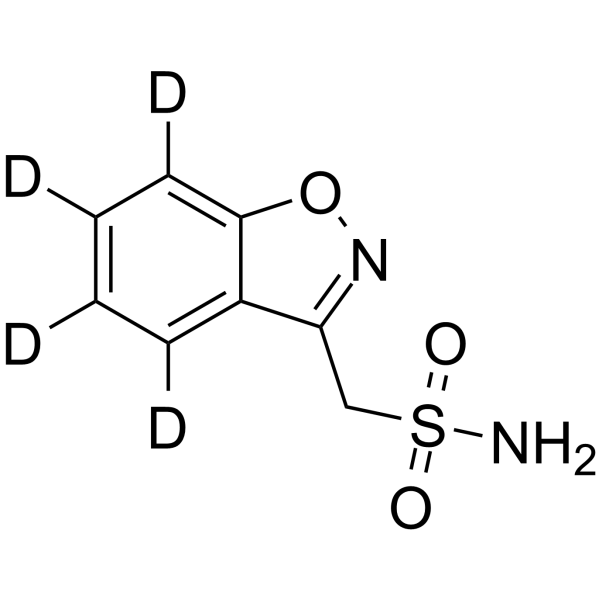 0 ImagesZonisamide-d4 is the deuterium labeled Zonisamide. Zonisamide (AD 810) is an inhibitor of zinc enzyme carbonic anhydrase (CA), with Kis of 35.2 nM and 20.6 nM for human mitochondrial isozyme hCA II and hCA V, respectively. Zonisamide has antiepileptic activity. Zonisamide can be used for the rsearch for epilepsy, seizures and Parkinson's disease.
-
Fenoverine
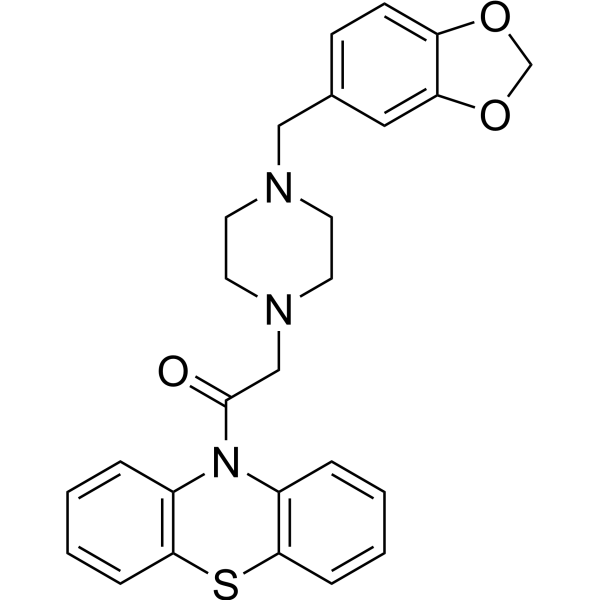 0 ImagesSynonyms: SpasmoprivFenoverine (Spasmopriv) is an orally active and powerful anti-spasmodic drug. Fenoverine reduces calcium ion influx by suppressing voltage dependent calcium channels. Fenoverine has antiemetic, analgesic, and antidiarrheal effects. Fenoverine induces rhabdomyolysis. Fenoverine can be used to study smooth muscle overexcitation related conditions such as gastrointestinal spasms.
-
Fasudil dihydrochloride
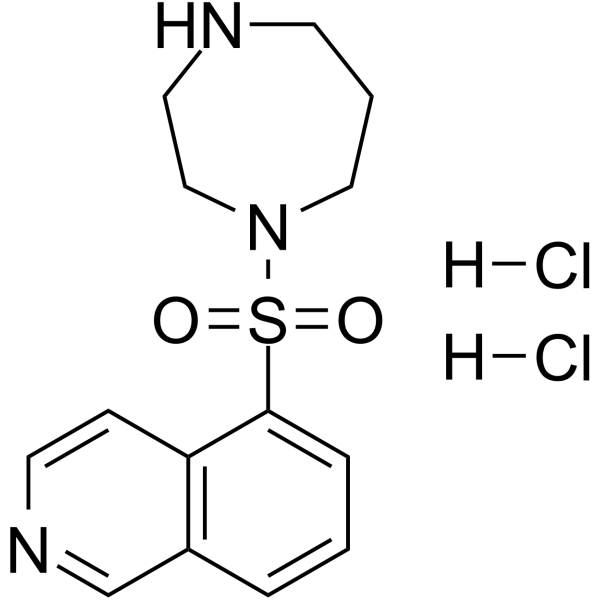 0 ImagesSynonyms: HA-1077 dihydrochloride; AT-877 dihydrochlorideFasudil (HA-1077; AT877) dihydrochloride is a nonspecific RhoA/ROCK inhibitor and also has inhibitory effect on protein kinases, with an Ki of 0.33 μM for ROCK1, IC50s of 0.158 μM and 4.58 μM, 12.30 μM, 1.650 μM for ROCK2 and PKA, PKC, PKG, respectively. Fasudil dihydrochloride is also a potent Ca2+ channel antagonist and vasodilator.
-
L-Ascorbic acid (GMP Like)
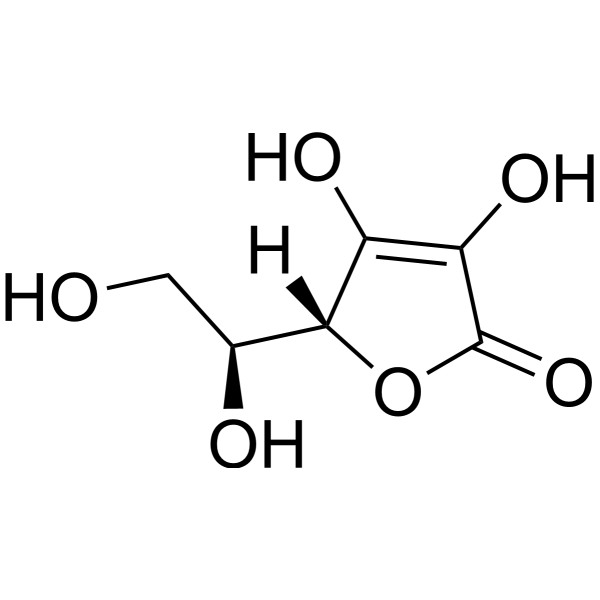 0 ImagesSynonyms: L-Ascorbate (GMP Like); Vitamin C (GMP Like)L-Ascorbic acid (GMP Like) is the GMP Like class L-Ascorbic acid (HY-B0166). L-Ascorbic acid (L-Ascorbate, Vitamin C), an electron donor, is an endogenous antioxidant agent. L-Ascorbic acid inhibits selectively Cav3.2 channels with an IC50 of 6.5 μM. L-Ascorbic acid is also a collagen deposition enhancer and an elastogenesis inhibitor. L-Ascorbic acid exhibits anti-cancer effects through the generation of reactive oxygen species (ROS) and selective damage to cancer cells.
-
ISX-9 (GMP)
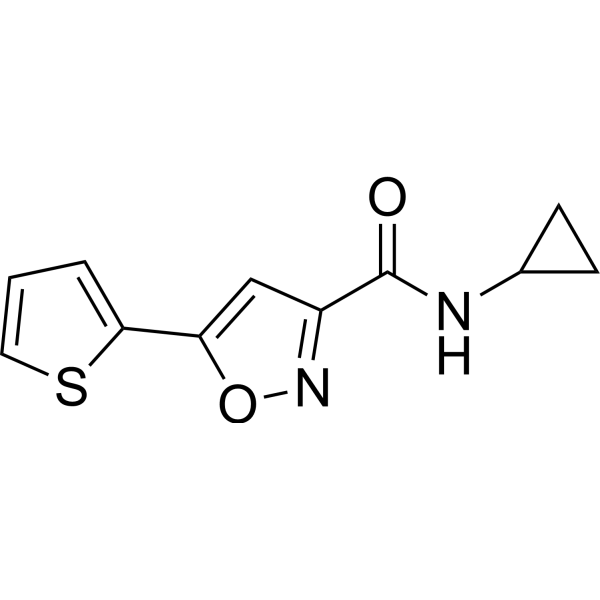 0 ImagesCat. No.: HY-12323GCAS No.: 832115-62-5Synonyms: Isoxazole 9 (GMP)ISX-9 (Isoxazole 9) is a potent inducer of adult neural stem cell differentiation.
-
(R)-Amlodipine-d4
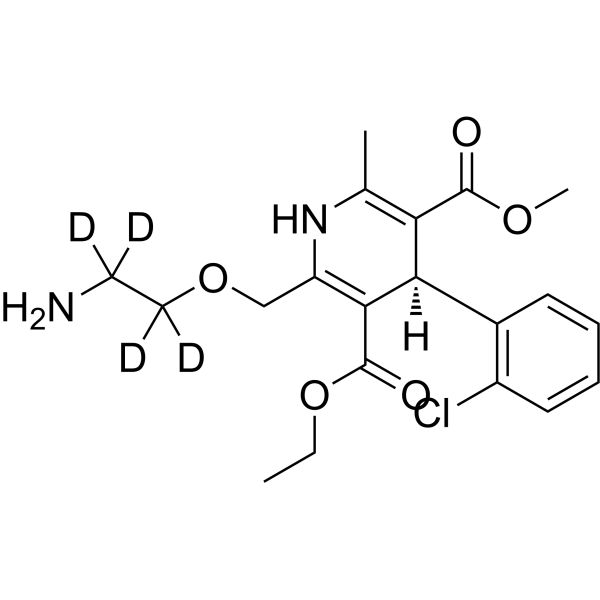 0 Images(R)-Amlodipine-d4 is the deuterium labeled (R)-Amlodipine.
-
Palmitoylglycine (Standard)
 0 ImagesSynonyms: N-palmitoyl glycine (Standard)Palmitoylglycine (Standard) is the analytical standard of Palmitoylglycine. This product is intended for research and analytical applications. Palmitoylglycine (N-palmitoyl glycine), an endogenous lipid that acts as a modulator of calcium influx and nitric oxide () production in sensory neurons. Palmitoylglycine is linked to an increased risk of Background Brugada syndrome (BrS) and interacts with BrS-associated proteins, demonstrating moderate binding affinities for DCC, CR1, CTSB, NAAA, DEFB1, EPHA1, IGF1/IGFBP3/ALS, and LTA[1][2][3].
-
Nothofagin
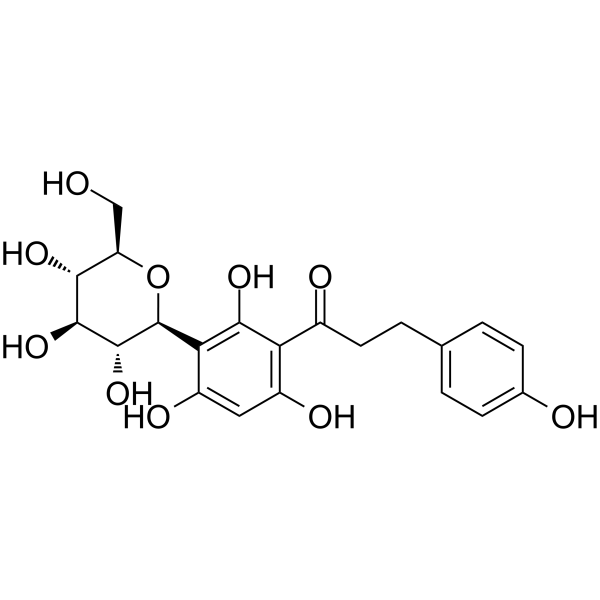 0 ImagesCat. No.: HY-113919CAS No.: 11023-94-2Nothofagin, a dihydrochalcone, is isolated from rooibos (Aspalathus linearis). Nothofagin downregulates NF-κB translocation through blocking calcium influx. Nothofagin has antioxidant activity and ameliorates various inflammatory responses such as the septic response and vascular inflammation.
-
Albanin A
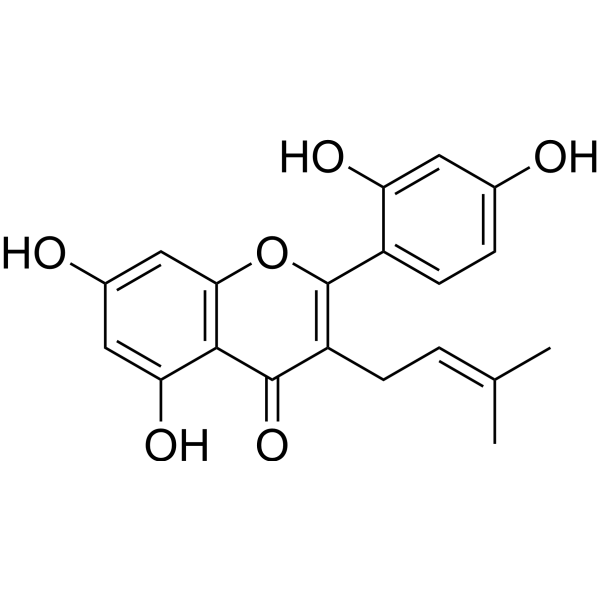 0 ImagesCat. No.: HY-N10772CAS No.: 73343-42-7Albanin A, a flavonoid, suppresses glutamate release by decreasing Ca2+/calmodulin/adenylate Cyclase 1 (AC1) activation in synaptosomes and exerts neuroprotective effect in vivo. Albanin A has anti-inflflammatory activity.
-
8-Br-7-CH-cADPR disodium
 0 ImagesCat. No.: HY-134269ASynonyms: 7-deaza-8-bromo-cADPR disodium; 7-deaza-8-bromo-cyclic ADP ribose disodium8-Br-7-CH-cADPR disodium (7-Deaza-8-bromo-cADPR) is a potent cADPR antagonist. 8-Br-7-CH-cADPR disodium shows partial inhibition of calcium elevation caused by sTIR dimerization. 8-Br-7-CH-cADPR disodium significantly decreases Paclitaxel (HY-B0015)-induced axon degeneration.